

Stress can build when family responsibilities, work, money worries and other demands leave little room to recover. Learning to feel calmer starts with noticing what you need and what can change. It does not require a perfectly quiet mind, constant positive thinking or doing everything yourself.
You may not be able to avoid every source of stress. You can still choose a small response, ask for practical help and seek support when the pressure is becoming too much. Use the options below as a starting point, with room to adapt them to your health, circumstances and caring responsibilities.
On this page
1. Try comfortable breathing
If you have a safe moment to pause, sit or stand in a comfortable position and loosen anything that feels restrictive. Let your breath move gently, without trying to take an unusually large breath or hold it. You can keep your eyes open and notice something steady in the room.
The NHS breathing exercise for stress describes gentle, unforced breathing, with optional counting. If counting becomes another task to get right, leave it out. If attention to breathing feels uncomfortable or makes you feel worse, stop and choose a different activity.
A pause might be a moment beside a window while another adult supervises the children, or sitting down before answering a difficult message. Keep responsibilities that need immediate attention in view. You do not have to finish an exercise before responding to a child or dealing with a hazard.
Afterward, ask a simple question: “What would make the next ten minutes more manageable?” The answer could be a drink of water, delaying a nonurgent reply or asking someone to take over one task. Feeling completely calm is not a condition for taking that step.
2. Make reflection optional
Meditation, prayer or quiet reflection may appeal to you, depending on your beliefs and preferences. Choose a form that feels meaningful rather than treating one practice as the correct way to cope. You can also prefer conversation, an ordinary household activity or a short break from screens.
For a brief reflection, notice one sound around you or the feeling of your feet on the floor. When another thought arrives, acknowledge it. There is no need to erase it or decide that it is a failure. You can return to your chosen focus, make a practical note or end the pause.
A useful thought might be: “I am worried about tomorrow’s appointment. I can check the time and arrange transport.” Reflection can help you identify a question; it does not settle every question or remove a real problem. Give yourself permission to act on what needs attention.
If stillness feels frustrating, choose an alternative. Folding a few towels, looking outside or listening to a familiar song may offer a change of pace. Keep the activity modest enough that it does not become another demand on an already crowded day.
3. Find support beyond alcohol
Alcohol is not a reliable stress-management plan. The NHS guidance on stress advises against using alcohol or other substances to relieve stress and recommends seeking support when coping is difficult.
If drinking has become your main way to get through the evening, consider talking with a health professional or an alcohol support service. You do not need to wait until you have chosen a label for your drinking before asking for help.
If you may be physically dependent on alcohol, get medical advice before stopping suddenly. Withdrawal can be dangerous. The NHS alcohol-support guide explains getting help to stop safely. Severe withdrawal symptoms, such as seizures or hallucinations, need emergency medical help.
For an ordinary stressful evening, you might arrange a check-in with someone you trust or choose a simple, alcohol-free routine that fits your circumstances. If the underlying issue is exhaustion, lack of support or a conflict at home, include that issue in the conversation too.
4. Choose manageable movement
Movement can be one option in a stress-management routine. A workout is not required. Choose an activity that fits your health, mobility, energy, available space and time. You might enjoy a short walk, gentle movement while seated or a familiar activity outdoors.
Consider what would make the choice easier: suitable shoes by the door, an accessible route or company from a friend. If you are caring for children, check supervision and safety rather than expecting yourself to fit a solo exercise session into an impossible schedule.
Notice your response without promising yourself that your problems will disappear. Some days an activity may feel helpful; other days you may need rest, food, a medical appointment or a practical change. Adjust rather than treating a missed workout as evidence that you are not trying.

5. Reduce the pressure and ask for help
Write down the demand that is pressing hardest, then separate what needs attention today from what can wait. Be specific. “Everything is too much” may become “I have two appointments at the same time and no transport.” The second description gives you something concrete to discuss.
- Change one expectation. Could a meal be simpler, an optional event be declined or a nonurgent job be postponed?
- Make one clear request. Try “Can you handle pickup on Thursday?” rather than hoping someone will notice you are overloaded.
- Share the ongoing work. Agree who will plan, remember and complete a responsibility, not just help when asked.
- Review the arrangement. If it is still unmanageable, revisit the workload rather than assuming you need a better attitude.
Gratitude and pleasant moments can have a place in your day without cancelling worry, anger or sadness. You can appreciate your family and still need time, boundaries and help. Our guide to Small Habits for Better Days: A Flexible Starting Point offers a way to choose a realistic habit without making happiness another obligation.
If stress is disrupting your sleep, daily functioning or relationships, or your own efforts are not helping, speak with a qualified health professional. You can describe what is happening, how long it has been going on and the support you have available. For more on choosing a next step, read Stress and Anxiety: Manageable Steps and Support.
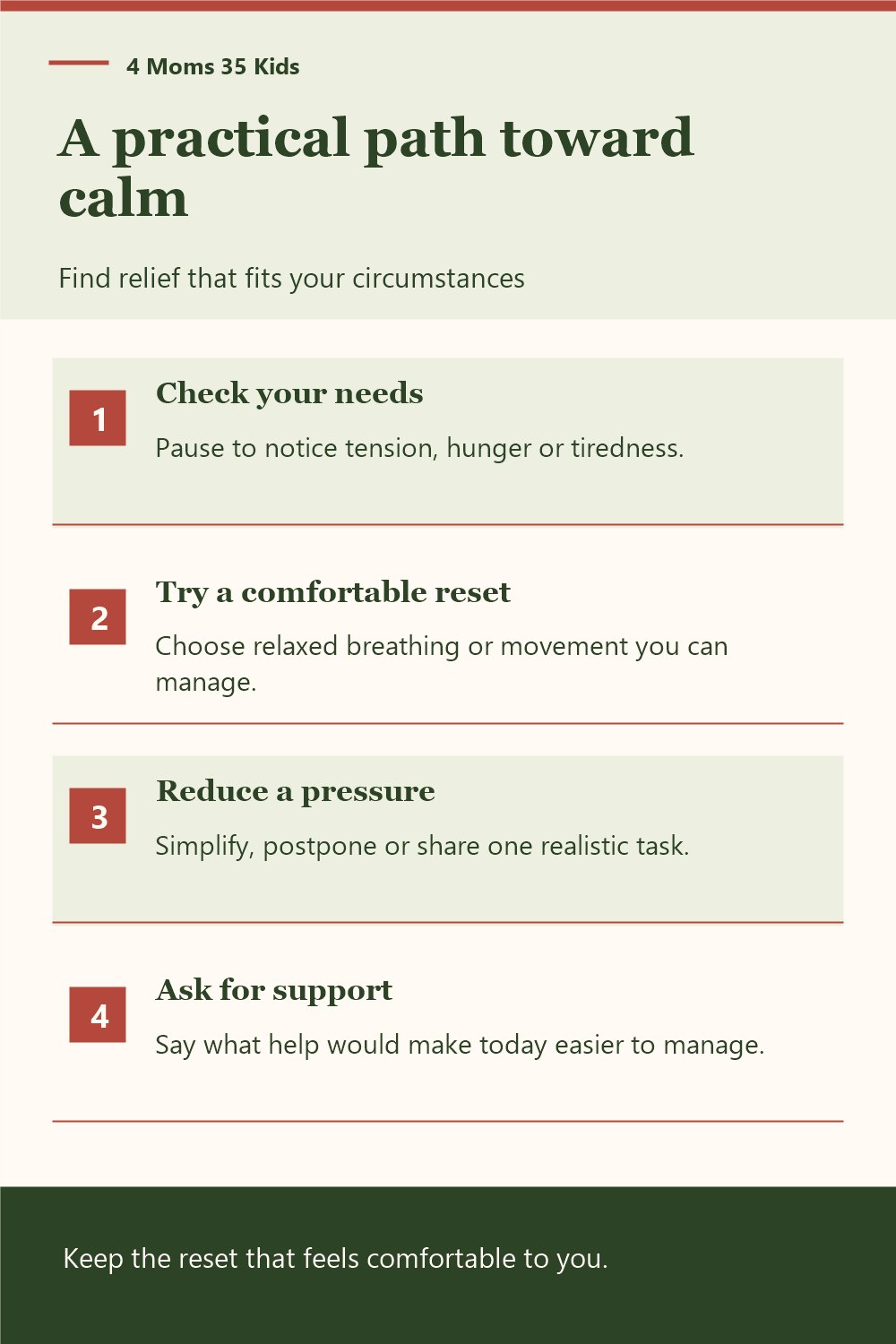
Read the infographic in text
A practical path toward calm Find relief that fits your circumstances
- Check your needs Pause to notice tension, hunger or tiredness.
- Try a comfortable reset Choose relaxed breathing or movement you can manage.
- Reduce a pressure Simplify, postpone or share one realistic task.
- Ask for support Say what help would make today easier to manage.
Keep the reset that feels comfortable to you.