

Introducing your children to someone you are dating can bring curiosity, excitement, worry or a mixture of feelings. A useful first meeting gives everyone a chance to say hello without asking your children to welcome a new family member immediately.
You are responsible for your adult relationship choices and for considering your children’s needs. Those responsibilities can sit together. Plan an introduction that leaves room for questions, familiar routines and the possibility of slowing down.
On this page
Consider the timing and the purpose
Think about why an introduction feels appropriate now. How well do you know your partner in everyday situations? Have you discussed what the meeting means? An introduction is a step in getting acquainted, rather than a promise of marriage, living together or a permanent role in your children’s lives.
Before making plans, ask yourself what you have observed about your partner’s patience, reliability and response to limits. Consider your children’s recent changes, your existing commitments and whether you can give them attention before and after the meeting.
There is no single calendar date that answers these questions for every family. You can wait while you learn more about the relationship. You do not have to introduce every person you date, and you do not have to predict the entire future before arranging a brief hello.
Talk with your children beforehand
Have the first conversation without your partner present. Use words that fit your children’s age: “I have been spending time with someone I like, and I am thinking about introducing you.” Explain what is planned and ask what they would like to know.
Leave room for an uncertain or unhappy response. You can listen without telling a child to be excited, calm or grateful. “You are not sure about meeting someone new” can open a conversation more easily than insisting that there is nothing to worry about.
Offer choices about a manageable part of the meeting, such as two familiar activities. Children should not have to decide whether your adult relationship is allowed, but their comfort and specific concerns deserve attention.
The University of Minnesota Extension’s guidance on family transitions encourages listening to children’s feelings, protecting time together and respecting their emotional and physical boundaries.

Prepare your partner and protect familiar routines
Keep a familiar part of family life in place around the introduction: a bedtime story, a regular meal or time with you afterwards. Make a specific plan you can follow through on rather than promising that nothing will ever change.
Tell your partner about practical preferences that may help the meeting, while keeping your children’s private information private. Agree that children can take time to warm up and do not need to offer hugs, affection or personal stories.
Explain the role for this first meeting: a person getting to know the children, not someone arriving to replace another parent or take charge of discipline. Discuss this before you are together so your children do not have to manage competing adult expectations.
If you share parenting, handle necessary adult communication directly and safely. Avoid asking children to carry messages or keep the relationship secret from another parent. Existing safety arrangements may affect how communication happens.
Keep the first meeting simple
Choose a brief, familiar activity with an easy ending. A snack at a café, a short walk or a game everyone already knows may offer a natural focus. Consider each child’s interests, accessibility needs and tolerance for noise or unfamiliar places.
Introduce everyone by name and keep the conversation ordinary. You might mention the activity you have planned or a shared interest. Avoid testing whether the children like your partner, asking them to entertain the adults or making a big announcement about your future together.
A polite greeting is enough. Quietness does not prove rejection, and an enthusiastic first meeting does not mean everyone is ready for more time together. Keep the visit within the plan unless everyone is comfortable with a change.
Check in and decide the next step
Afterwards, spend some time with your children without your partner present. Ask an open question such as, “What was that like for you?” Listen for particular experiences rather than requesting a verdict on the person you are dating.
If something felt uncomfortable, ask enough to understand and take the concern seriously. You can change the activity, shorten the next meeting or pause introductions. If a child reports unwanted touching, frightening behaviour or pressure to keep secrets, put their safety first and seek appropriate professional support.
Keep adult disappointment away from the children. They do not owe anyone affection or reassurance. If distress persists or begins affecting daily life, a pediatrician or qualified family professional can help you consider your child’s needs and the next steps.
Getting acquainted can happen gradually. Aim for a respectful, manageable experience rather than instant closeness.
Read the infographic in text
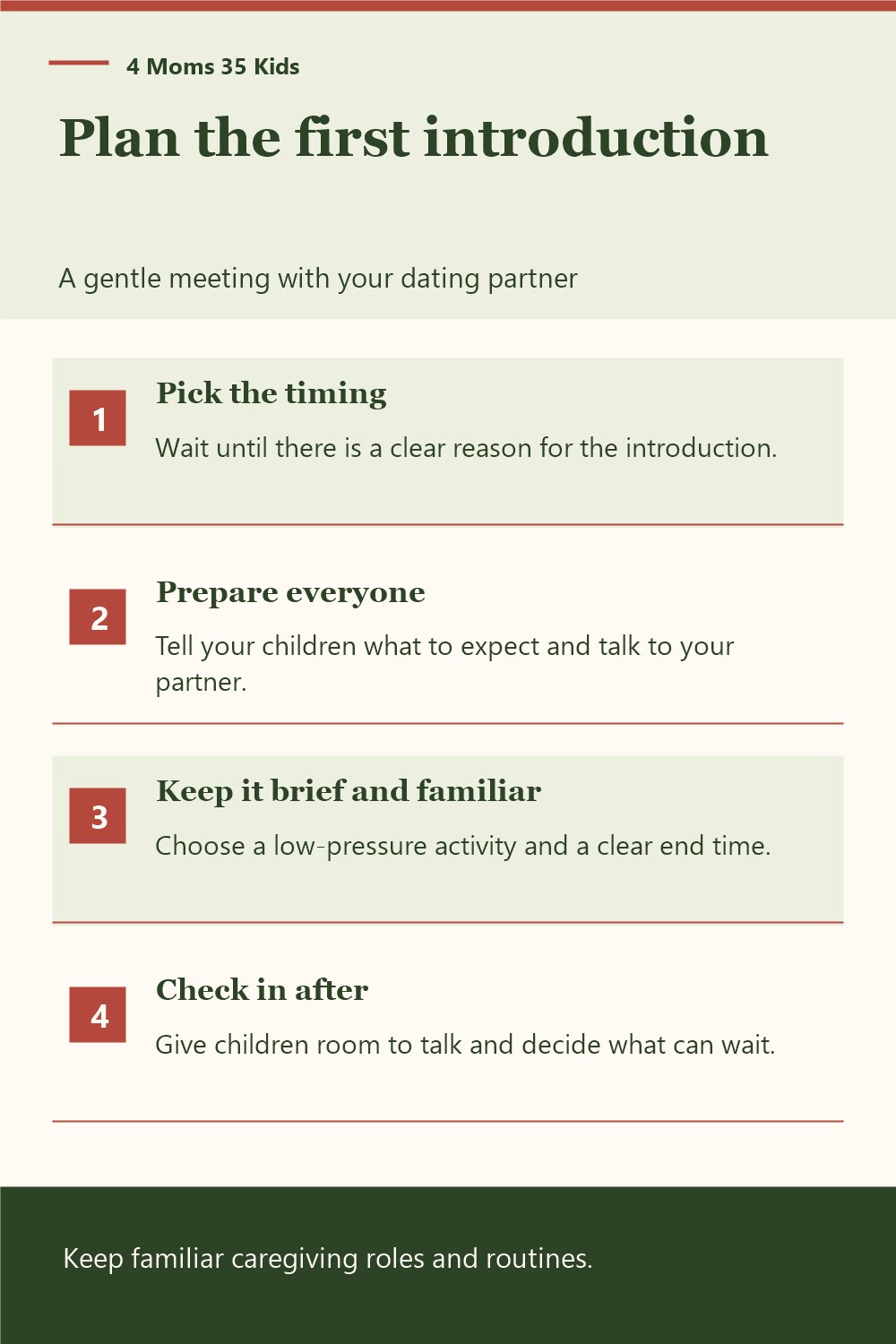
Plan the first introduction A gentle meeting with your dating partner
- Pick the timing Wait until there is a clear reason for the introduction.
- Prepare everyone Tell your children what to expect and talk to your partner.
- Keep it brief and familiar Choose a low-pressure activity and a clear end time.
- Check in after Give children room to talk and decide what can wait.
Keep familiar caregiving roles and routines.