

Curiosity can make room for a different question, a new interest or a less hurried conversation. You do not have to feel fascinated by everything or recreate the energy you had as a child. A curious moment can be small enough to fit into an ordinary day.
For parents and caregivers, that might mean noticing what a child is trying to do before stepping in, wondering why a routine keeps becoming difficult or exploring a question together. The aim is to understand more, with room for limits and rest.
On this page
Notice before making an assumption
A familiar description can sometimes become the only explanation you consider: “She never listens,” “I’m bad at this,” or “Our mornings are always impossible.” Start by describing the particular situation instead.
For example, “We had trouble getting shoes on today” leaves room to ask whether the shoes hurt, an instruction was unclear or there was too little time. You can respond to what happened without turning one difficult morning into a judgment about a child or yourself.
This does not mean abandoning every label. Names for an experience, identity, health condition or support need can help people understand themselves and ask for what they need. The useful question is whether a description helps you understand the situation or stops you from looking further.
Ask questions that leave room for an answer
Choose a moment when the other person has some room to respond. Try “What was the difficult part?” or “Would you like help, or would you rather try first?” Then listen before adding another question.
Curiosity is different from questioning someone until they give the answer you want. A child, partner or friend may need time, privacy or the option not to discuss something. Respect that limit rather than treating every personal detail as something you need to discover.
You can also check your understanding: “Have I got that right?” If a conversation becomes tense, it may help to pause and return later. Less Defensive Conversations: Clear Requests, Listening and Boundaries offers related ways to keep a discussion respectful.

Try one small exploration
Pick something you would like to understand, rather than assigning yourself a whole new project. You might look up the name of a bird you noticed, try a different way to organise a shared task or read a few pages about an interest you have put aside.
The NHS guide to mental wellbeing includes learning new skills and suggests choosing activities you enjoy without feeling obliged to earn qualifications. You can explore an interest without making it a test of achievement.
When a question involves factual claims, look for a reliable source that explains how the information is known. It is reasonable to say, “I’m not sure yet.” A compelling story or confident answer may be a starting point for checking, rather than a reason to stop asking.
Make space for children’s questions
You do not need to know every answer to join in. Try, “I wonder too. How could we find out?” A library book, a supervised activity or an observation you make together can be enough.
For a younger child, you might explore which objects roll down a gentle slope or what happens when colours mix. An older child might want to compare explanations, learn a practical skill or show you something they already know. Let their interest guide the activity where possible.
Leave room for preferences and different ways of taking part. A child may want to watch first, ask a question later or stop. Curiosity does not have to become a lesson, a quiz or another thing to finish.
You can model learning by admitting a mistake or changing your mind after checking something. Being a Role Model: Everyday Examples, Boundaries and Repair explores how ordinary actions can offer examples to children.
Keep curiosity within your capacity
A busy or difficult day may leave little room to explore. That is a limit you can respect. You can save a question for another time, choose something simpler or decide that rest is what you need.
If a routine keeps causing frustration, ask one practical question: “What part could we make easier?” You might prepare something in advance, remove an unnecessary step or ask someone to share the task. Small Habits for Better Days: A Flexible Starting Point offers ideas for changes that fit everyday life.
Curiosity cannot remove every problem or make you feel free on demand. It can give you another way to approach a moment: notice, ask, listen and decide what to try. You can begin with one question and leave the rest for later.
Read the infographic in text
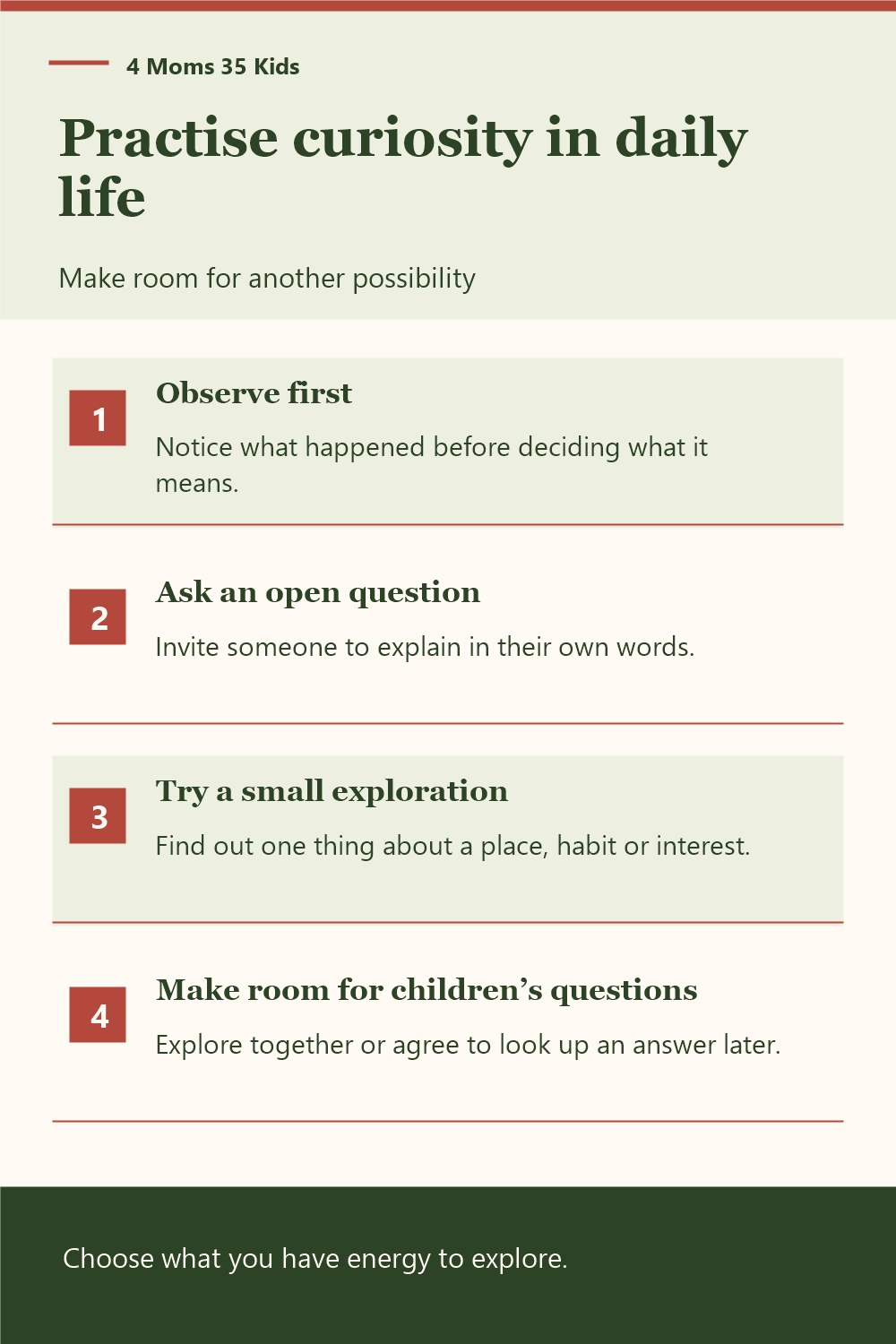
Practise curiosity in daily life Make room for another possibility
- Observe first Notice what happened before deciding what it means.
- Ask an open question Invite someone to explain in their own words.
- Try a small exploration Find out one thing about a place, habit or interest.
- Make room for children’s questions Explore together or agree to look up an answer later.
Choose what you have energy to explore.