

A helpful habit does not have to turn a difficult day into a happy one. It might make breakfast easier, give you a little company or leave you with one less task to carry. Start with something that fits your energy, responsibilities and resources.
The ideas below are a menu, not a daily checklist. Choose one small change, try it and adjust it. You do not need a perfect routine, a cheerful expression or an expensive trip to deserve care.
In this article
1. Notice what you need
You can enjoy a funny moment without forcing yourself to smile through sadness. Ask whether you need rest, food, company, practical help or some space.
If writing helps, make a brief note about how the day is going. You can use a few words rather than a detailed journal.
Keep a short list of things you find comforting or useful, such as a familiar song, a simple meal or someone you can message. It can save decisions on a tiring day.

2. Make everyday care more accessible
- Movement: choose an activity that suits your body and circumstances. A short stretch, seated movement or gentle walk can be an option.
- Rest: look for a workable bedtime routine and opportunities for support with interrupted nights. Needing a nap does not establish why you are tired.
- Food: make eating manageable with simple meals and available help. You do not need a special “happiness” diet or rules that label carbohydrates as bad.
- A pause: try a comfortable breath or a quiet moment. Stop an exercise if it makes you uncomfortable; calm is not something you have to force.
- Reflection: meditation, prayer or quiet attention can be optional practices if they suit you.
- Health needs: seek appropriate advice about persistent tiredness, pain or other concerns rather than assuming a habit change will solve them.
3. Choose supportive connection
A short call, a shared meal or a message to a trusted friend may fit better than a busy social plan. Connection can include asking for practical help, not only providing it. The NHS mental wellbeing guide offers further ideas for connection and enjoyable activities.
- Offer a sincere thank-you or kind comment when you want to. You are not responsible for managing everyone’s mood.
- Help someone in a way you can afford in time and energy. Volunteering is a choice, not another obligation.
- Decide your own boundaries after hurt. Forgiveness and renewed contact are personal choices; neither is a requirement for a better day.
4. Make the day more workable
- Clear one small area if that helps. Keep useful and meaningful belongings rather than rushing to discard them.
- Adjust a notification or put the phone aside briefly if it interrupts you. Keep access to childcare, work, accessibility tools and support.
- Spend a little time outdoors if it is accessible and safe. An open window or a view of greenery may be a simpler option.
- Choose a small goal and leave room for changes. An unfinished task can be rescheduled or made smaller.
- Make space for something you enjoy alone, even if it is just a few pages of a book.
- Plan an affordable outing if you want one. A holiday is not necessary, and planning one should not create financial pressure.
5. Review what helps
If gratitude feels useful, notice one thing you appreciate. It can sit alongside grief, frustration or an unmet need.
Compare the habit with your own needs rather than someone else’s routine. Keep, change or drop it according to what you learn.
If the real issue is too much work or too little support, consider what can be shared, delayed or discussed. Adding more habits may not be the answer.
If low mood persists or daily life becomes difficult, speak with a qualified health professional. The NHS information on low mood and getting support can help you decide where to start. Needing help does not mean you failed at self-care.
Read the infographic in text
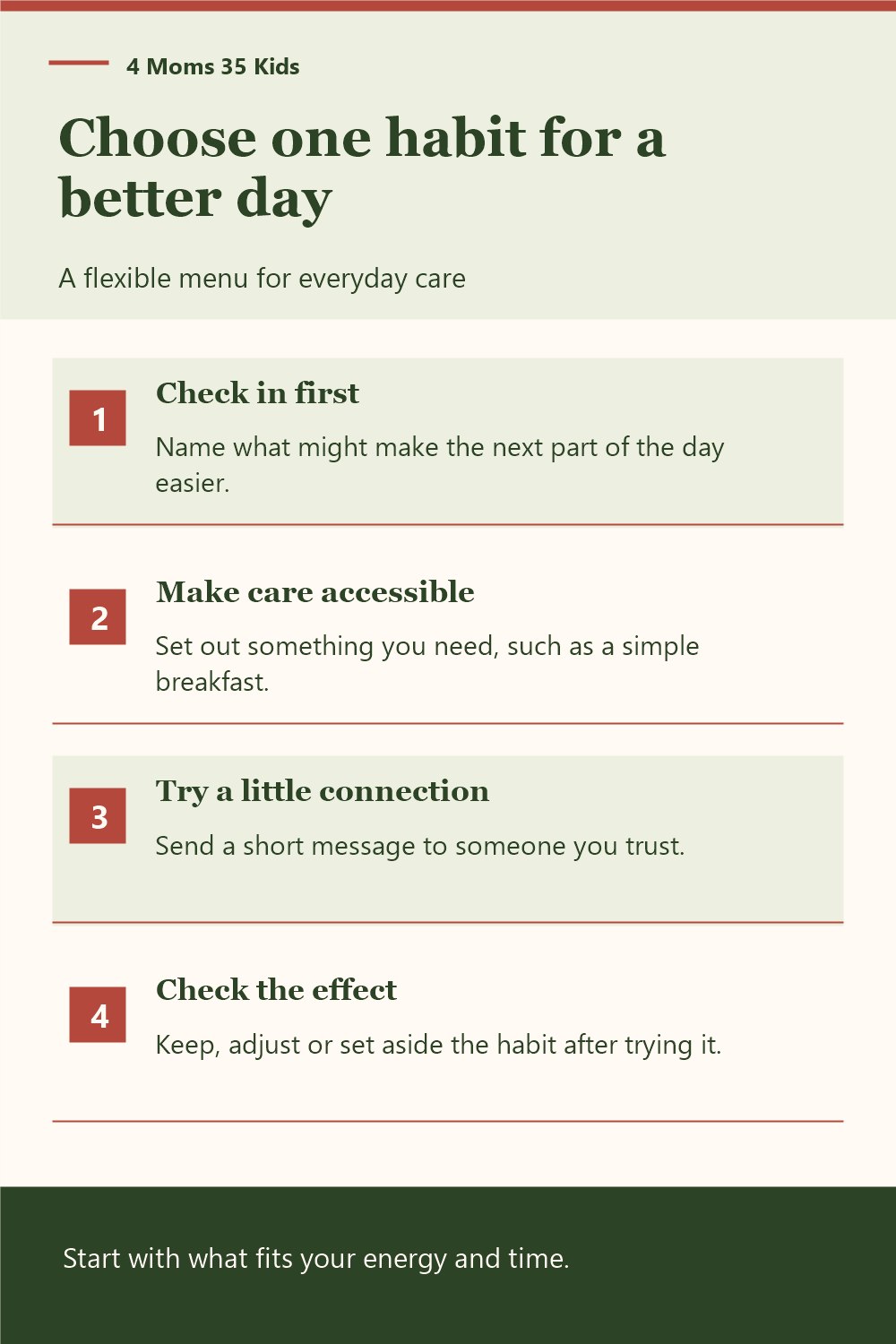
Choose one habit for a better day A flexible menu for everyday care
- Check in first Name what might make the next part of the day easier.
- Make care accessible Set out something you need, such as a simple breakfast.
- Try a little connection Send a short message to someone you trust.
- Check the effect Keep, adjust or set aside the habit after trying it.
Start with what fits your energy and time.