

A change of scene can give you a welcome break from the usual demands. But travelling to get rid of stress works better as a hope than a promise: a trip may offer rest, connection or something enjoyable to look forward to, while also bringing costs, decisions and tiredness.
Start with the kind of break you actually need. You do not have to go far, spend beyond your means or organise a perfect family holiday. A manageable outing, a familiar place or time at home with fewer responsibilities may suit you better.
On this page
Choose the break that fits your needs
Ask what feels hardest at the moment. If you are exhausted by noise and constant decisions, a packed sightseeing schedule may add more of both. If you miss companionship, an easy visit with someone you trust may matter more than the destination. Be specific about what you want more room for.
Compare the whole cost with what you can comfortably manage: transport, food, accommodation, childcare, access needs and the work of organising it. Include the time and energy needed before and after. A short, nearby break can be a complete choice rather than a disappointing version of a bigger trip.
You can also decide not to travel. Try protecting an afternoon from chores, sharing a caring task or visiting somewhere familiar. Changing the amount you have to carry may be more useful than changing the scenery.
Make the planning load smaller and fairer
Choose a few essentials before adding extras. Where will you sleep? How will you get there? What does each person need to eat, rest and feel comfortable? Check access information directly when it matters to your plans, and leave extra time around transfers or unfamiliar journeys.
If you are travelling with another adult, divide ownership of tasks. “Handle the journey” can include checking times, booking, keeping the details and having a backup plan. One person doing every task while everyone else waits for instructions can still feel like work away from home.
Explore unfamiliar places with respect. Local people do not owe visitors a conversation or a lesson about hardship. Learn basic customs, ask before photographing someone and accept a refusal. Curiosity can be enjoyable without turning other people’s lives into a way to judge your own.

Leave room for rest and different preferences
Build the day around one or two priorities, with space between them. Check what children and adults can realistically manage. Food breaks, quieter time, familiar comfort items and a plan for leaving early may be more useful than squeezing in another attraction.
Agree on a simple way to ask for a pause. “I need half an hour somewhere quieter” gives useful information. When possible, plan who will care for the children during each adult’s break so that rest is available to everyone. Travelling alone with children may call for a simpler plan or practical help.
You do not need to push beyond your comfort zone to make the trip worthwhile. Someone may enjoy a familiar cafe while another wants a new activity. Look for workable choices rather than insisting that everyone have the same kind of fun.
Plan a gentler journey home
Think about the first day back before you leave. Could you have an easy meal ready, postpone a nonessential commitment or leave some time before returning to work? You may not have that flexibility; in that case, make the return plan simpler where you can.
Expect ordinary tiredness and mixed feelings. Enjoying parts of a trip does not mean you must return transformed, grateful for every difficulty or ready to do more. A disappointing day does not cancel a pleasant moment, either.
Notice one part of the break you might bring into everyday life: a slower breakfast, less phone checking or time with someone you care about. Keep it small enough to fit your actual week. You do not need to recreate the whole holiday.
Notice what helped and what still needs support
Afterwards, ask what gave you room to breathe and what added pressure. Perhaps the walk helped, but the expense did not; perhaps seeing family felt good, but staying overnight was too much. Use that information for your next choice rather than judging whether you travelled correctly.
A trip cannot resolve every source of stress. Debt, an unsafe relationship, illness or an unmanageable caring load may need specific help. If stress is affecting daily life, you are struggling to cope or self-help is not helping, consider speaking with a health professional. The NHS guide to stress includes practical coping ideas and routes to support.
The useful question is not whether you went somewhere impressive. It is whether the break was manageable and gave you something you needed. Rest can count even when it happens close to home.
Read the infographic in text
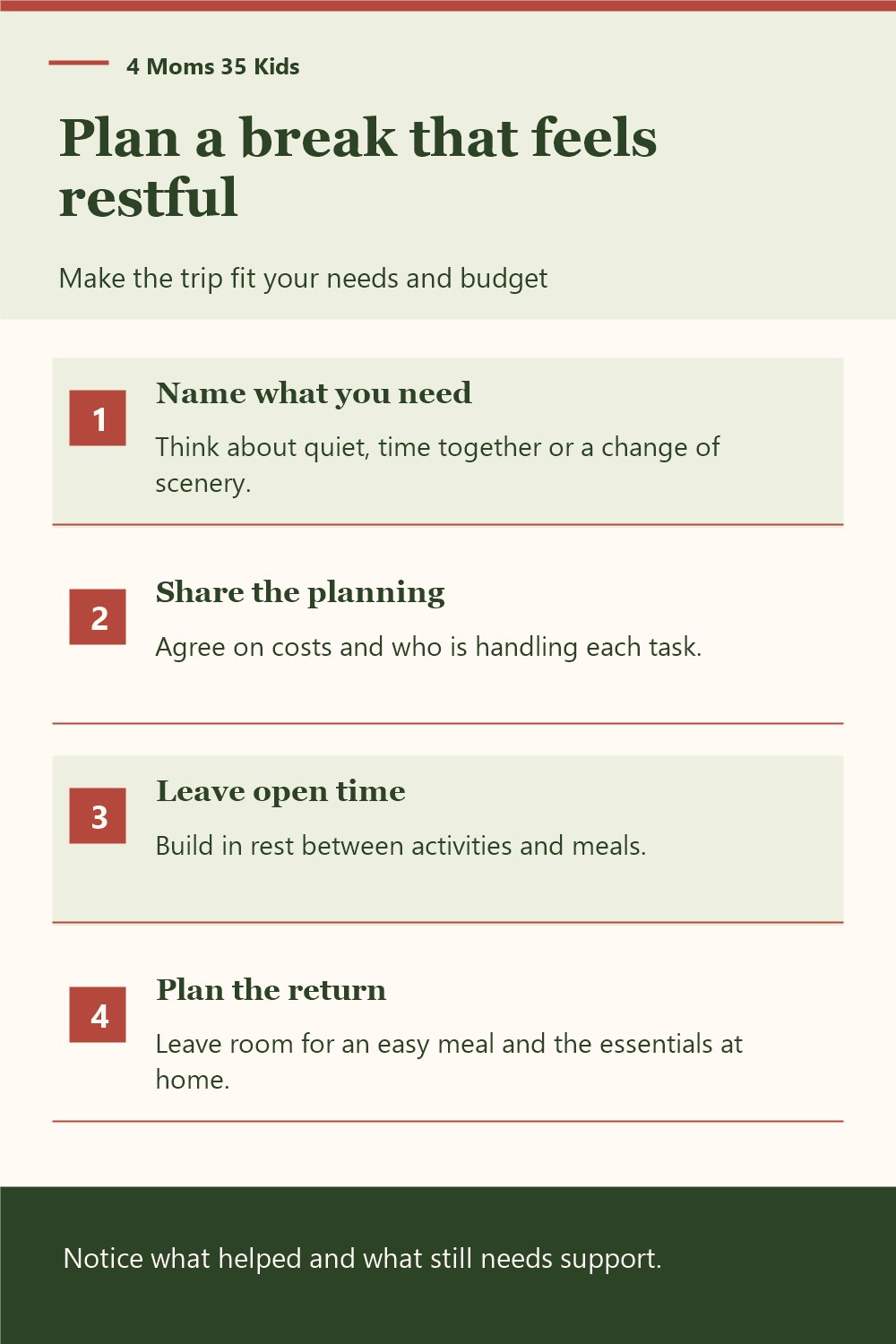
Plan a break that feels restful Make the trip fit your needs and budget
- Name what you need Think about quiet, time together or a change of scenery.
- Share the planning Agree on costs and who is handling each task.
- Leave open time Build in rest between activities and meals.
- Plan the return Leave room for an easy meal and the essentials at home.
Notice what helped and what still needs support.