

When you cannot get started, calling yourself lazy rarely tells you what would help. You may be tired, overloaded, unsure of the next step or trying to do more than your day can hold. The aim is to make a task more workable, not to pass a test of character.
Choose one or two of these ideas to try. You do not need to turn all ten into a new set of obligations.
1. Check what you need before adding pressure
Pause long enough to notice hunger, tiredness, discomfort or an already crowded schedule. If your capacity is low, rest or support may be more useful than another motivational speech.
2. Pick the task that matters today
Separate an actual deadline or essential responsibility from something that can wait. If you are caring for children or another family member, include that work when you decide what your day can realistically hold.

3. Define the next visible action
“Deal with the paperwork” is vague. “Find the letter and put it on the table” gives you somewhere to begin. Choose an action small enough that you can recognise when it is finished.
4. Make the starting point easier to reach
Place the item you need where you will use it, open the relevant document or put the first few supplies together. You do not have to reorganise a whole room before beginning one task.
5. Try a short, optional work period
If a timer helps, choose a brief period and give yourself permission to reassess when it ends. The timer is a tool for reducing uncertainty, not a rule that you must push through pain, distress or exhaustion.
6. Adjust one distraction
Silence nonessential notifications, close an unrelated tab or move one distracting item. Aim for a workable environment rather than an expensive set of equipment or a perfectly clear desk.
7. Ask for a practical kind of help
You might ask someone to share a chore, help you decide what comes first or keep you company while you start. Agree on the kind of support you want; being watched or criticised is not the same as being helped.
8. Make room for a comfortable break
A pause might mean sitting quietly, stretching if comfortable, getting a drink or stepping outside. You do not need a strenuous workout to make a break count, and an activity should fit your health and ability.
9. Notice what changed
Record a specific result: “I found the form” or “I asked for an extension.” If you did not begin, ask which barrier remained. That can suggest a smaller step or a different kind of help.
10. Look beyond productivity when the problem persists
If low energy or motivation is a new, lasting change, or comes with low mood, loss of interest or difficulty managing daily life, consider speaking with a healthcare professional. The National Institute of Mental Health’s depression information describes why these experiences may deserve assessment. They should not be treated as proof that you are lazy.
A useful plan fits a real person with changing demands and energy. Adjust it as you learn what helps.
Read the infographic in text
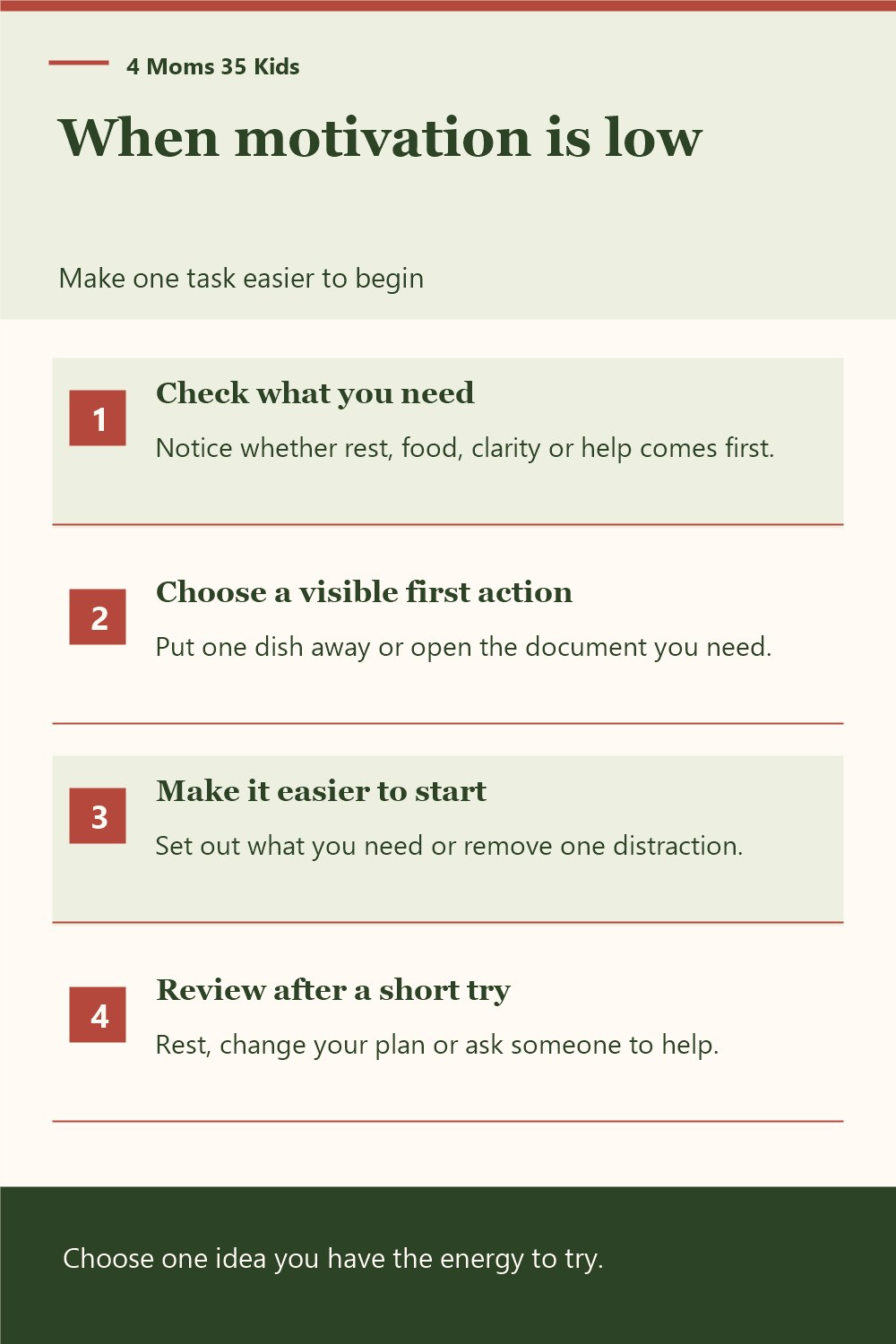
When motivation is low Make one task easier to begin
- Check what you need Notice whether rest, food, clarity or help comes first.
- Choose a visible first action Put one dish away or open the document you need.
- Make it easier to start Set out what you need or remove one distraction.
- Review after a short try Rest, change your plan or ask someone to help.
Choose one idea you have the energy to try.