

A disagreement can become harder when you feel criticised, unheard or drawn into defending every detail. You may want to explain yourself quickly, interrupt or withdraw. Start with the part you can influence: what you say, what you ask and whether the conversation can continue respectfully.
You cannot make another person stop being defensive through a perfect tone or phrase. Crossed arms, silence or looking away also do not tell you exactly what they feel. Ask where you can, stay specific and keep your own limits in view.
On this page
1. Describe the actual issue
Choose one event you want to address. “We agreed that you would collect the children today, and the plan changed without a message” is easier to discuss than “You never care about this family.” A specific example leaves room to clarify what happened.
Separate an observation from a conclusion. “You looked at your phone while I was talking” describes an action. “You were trying to humiliate me” assumes an intention. You can explain that the action hurt without claiming to know the reason.
If several problems have built up, write them down privately and choose which needs attention first. A conversation about one missed arrangement does not need to resolve every disagreement you have ever had.
2. Own your part without taking all the blame
If you interrupted or spoke harshly, acknowledge that clearly: “I raised my voice. I want to try again without shouting.” You can apologise for your behaviour while still discussing the original concern.
Responsibility is specific. You are not required to accept blame for another person’s threats, insults or choices to get them to listen. Their reaction remains their responsibility, even if the conversation is uncomfortable.
Appreciation can be sincere and useful, but it does not need to become a performance. You can recognise a helpful effort without praising someone into agreement or pretending that a harmful action was acceptable.
3. Make a clear request
Say what would help in practical terms. “Could we send a message as soon as a pickup plan changes?” gives both people something to consider. “Show that I matter” may express the hurt but leaves the next action unclear.
Keep requests workable. An expectation of immediate replies throughout the day may not fit work, caring responsibilities or the other person’s need for privacy. Discuss a realistic arrangement rather than using response time as a test of love.
You can explain a feeling without making it a demand: “I felt worried when I did not know the plan. I would like us to agree how to update each other.” The other person can offer information or a different proposal.

4. Check what you have understood
Leave room for an answer. Summarise what you heard and ask whether you have understood: “You thought the message had gone through. Is that right?” Listening does not require agreement, and clarification does not erase the impact of what happened.
The NHS guide to healthy relationships suggests checking understanding and taking a break when a discussion becomes difficult to manage calmly. Use those ideas as options, without expecting them to control someone else’s response.
If you are unsure about silence or a change in posture, ask an ordinary question: “Do you need a moment, or would you like to explain your view?” Avoid treating a gesture as evidence of hidden trauma or a particular personality.
5. Pause and protect your limits
A pause can be clear: “I want to discuss this, and I need a break. Could we return to it after dinner?” If a time is agreed, follow through or communicate a change. You do not have to finish a conversation while exhausted or overwhelmed.
If someone threatens you, blocks you from leaving or makes you afraid of their response, prioritise safety and individual support. This is more than a problem with conversational technique. You do not have to keep explaining or become more vulnerable to prove that you tried.
For further reflection, read Working Through Guilt and Shame: Responsibility, Repair and Care and Living With Love: Everyday Care, Family Choices and Your Own Needs.
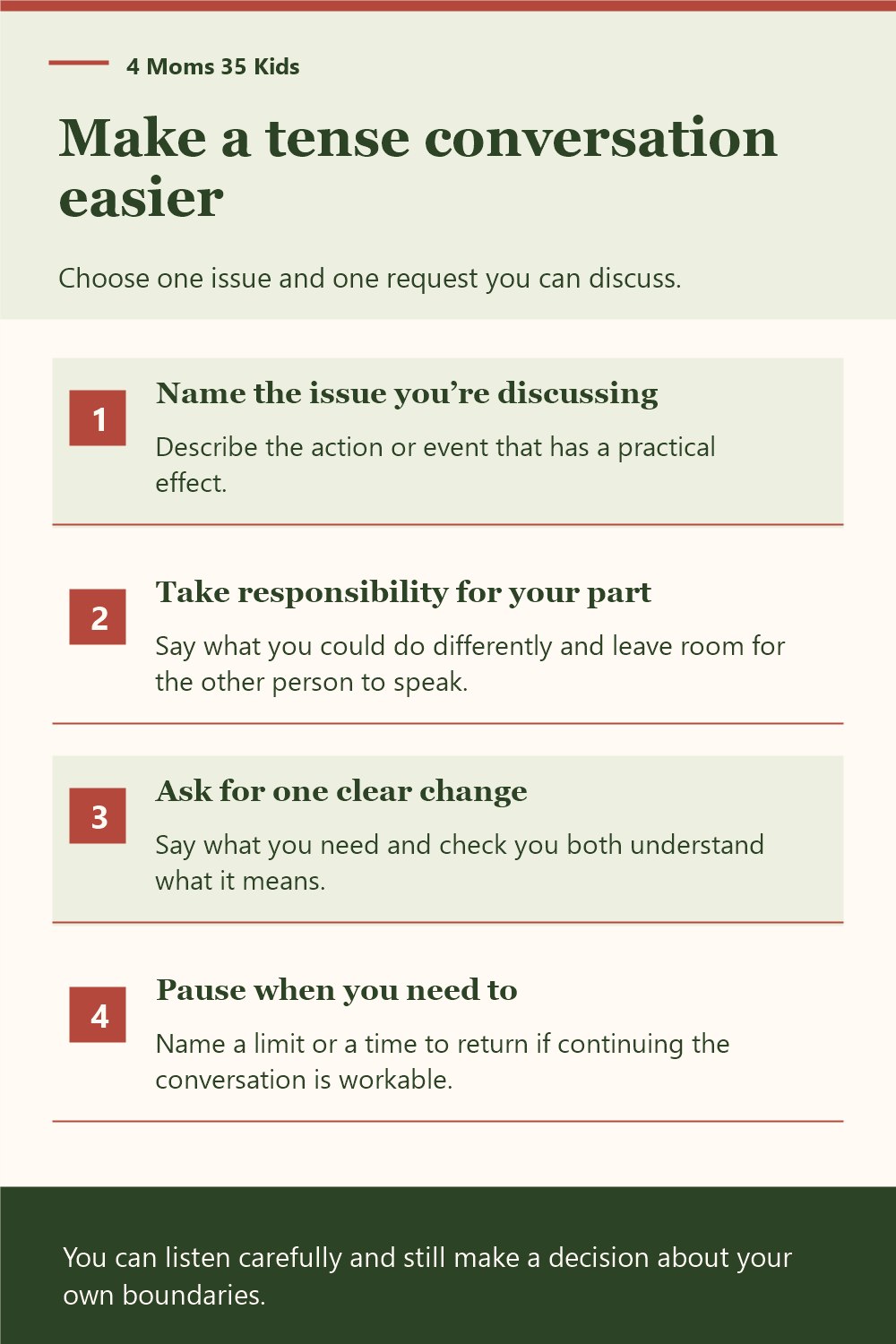
Read the infographic in text
Make a tense conversation easier Choose one issue and one request you can discuss.
- Name the issue you’re discussing Describe the action or event that has a practical effect.
- Take responsibility for your part Say what you could do differently and leave room for the other person to speak.
- Ask for one clear change Say what you need and check you both understand what it means.
- Pause when you need to Name a limit or a time to return if continuing the conversation is workable.
You can listen carefully and still make a decision about your own boundaries.