

Dating after divorce can bring interest, uncertainty, relief or a mixture of feelings. You can want adult companionship while also protecting time with your children, your privacy and the routines that make family life manageable.
You choose whether to date, pause or stay single. If you decide to meet someone, start with a plan that fits your circumstances. A first date does not need to become a commitment or a family introduction.
On this page

Choose a pace that fits your life
Consider what you have room for now. You might want a conversation over coffee, occasional dates or the possibility of a longer relationship. Being clear about your current wishes can help you decide which invitations to accept and what to discuss with a date.
Look at practical details before making plans: reliable childcare, travel, cost and the time you need afterwards. You can decline a date that would leave you stretched. You can also change your mind after agreeing, while communicating the change respectfully.
Notice how the other person responds to a limit. “I am available on Saturday afternoon” gives useful information. Repeated pressure to cancel family plans, disclose private details or move faster is a reason to reconsider the arrangement.
Keep early dating separate from family routines
You can get to know someone without involving your children in each meeting. Keep their school, location, photographs and personal experiences private when talking to a new person. Discuss your own life without making a child responsible for your dating story.
If someone asks to meet your children before you are comfortable, you can say: “I am keeping dating separate from family time while we get to know each other.” You do not need to promise an introduction date to justify that boundary.
Offer reassurance you can follow through on
Explain changes in everyday terms your child can understand. Say what is happening and what will stay familiar: who is collecting them, when you will be home or when you will have time together. Keep promises specific enough to honour.
A new partner does not erase your child’s place in your life. Make room for ordinary time together where dating is not the main topic. You can answer a question briefly and return to a shared activity without turning every conversation into a family meeting.
Listen to each child’s response
Ask what your child is wondering about, and listen before offering explanations. “What part feels different for you?” leaves more room than deciding in advance that they are jealous or being difficult.
The Public Health Agency of Canada’s guide to new relationships and blended families offers further reading on children’s concerns and gradual adjustments. Your child can have mixed feelings without being responsible for deciding your adult relationship.
Plan introductions honestly
When you want a meeting, discuss it with your partner and prepare your child beforehand. Give a straightforward explanation of who the person is. Avoid staging an accidental encounter or asking your child to keep the meeting secret.
Choose a short activity with a clear ending, such as a brief visit to a familiar park or a shared snack. Keep the first meeting free of big announcements. Afterwards, give your child a private opportunity to say how it felt.
Ask for considerate behaviour while allowing personal space. A child can say hello without hugging, calling someone a parent or displaying instant affection. Take a specific concern about the person’s behaviour seriously and look into it.
Discuss time, privacy and overnight plans
Talk with your partner about visiting times, personal space and what each person is comfortable with. An invitation to spend time together does not create an obligation to host overnight or share a home.
If you are considering a change that affects the household, think through sleeping arrangements, privacy and the next morning’s routine. Explain relevant practical changes to your children without sharing intimate details. You can delay a plan that does not yet work for the people involved.
Keep caregiving roles clear
A person you are dating should understand the limits of their role around your children. Discuss how they should respond if a problem arises during a visit, and keep responsibility for parenting decisions with the responsible adults.
Do not assume that a warm first meeting makes someone a suitable caregiver. Treat decisions about supervision and caregiving separately from your feelings about the relationship.
Keep adult matters with the adults
Children do not need to carry messages, arrange introductions or report on either parent’s relationships. Where communication with another parent is safe and appropriate, keep practical parenting information separate from arguments about dating.
You are not required to arrange shared social time between an ex and a new partner to prove that everyone gets along. If there has been intimidation or controlling behaviour, seek confidential individual support before arranging contact or sharing private information.
Take later commitments one decision at a time
Exclusivity, moving in and remarriage each deserve their own conversation. Discuss what a proposed change would mean in daily life, listen to the people affected and leave room to reconsider. If you marry, children may enjoy choosing a small part of a celebration, but the adults remain responsible for the decision and the transition.
Read the infographic in text
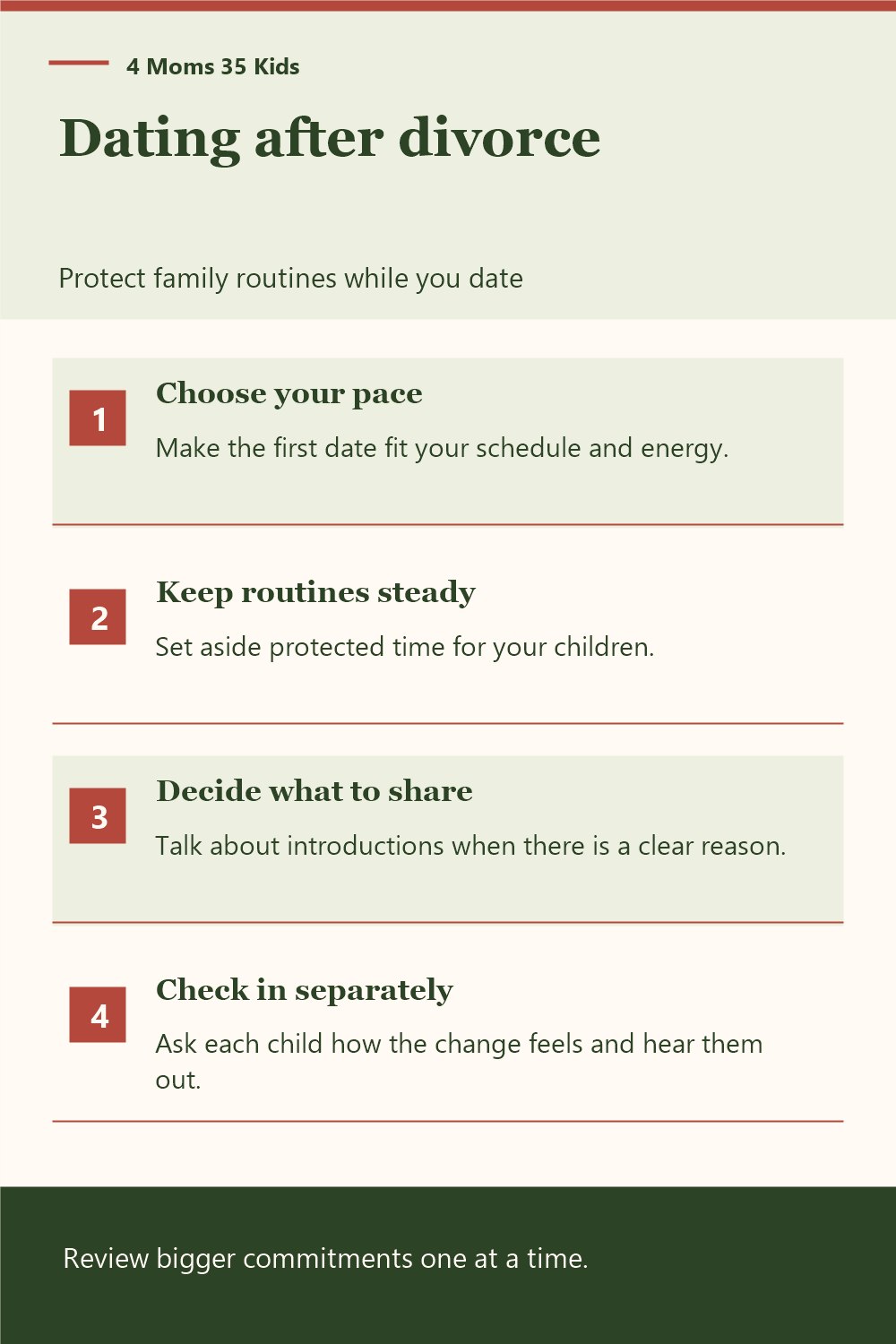
Dating after divorce Protect family routines while you date
- Choose your pace Make the first date fit your schedule and energy.
- Keep routines steady Set aside protected time for your children.
- Decide what to share Talk about introductions when there is a clear reason.
- Check in separately Ask each child how the change feels and hear them out.
Review bigger commitments one at a time.