

Guilt and shame can become tangled when you are trying to care for a family, meet expectations or make sense of something you regret. “I wish I had handled that differently” can quickly become “I am a bad parent” or “I let everyone down.” You can take an action seriously without making it the whole story of who you are.
Start by asking what happened, what was within your control and what would help now. Feeling guilty does not always establish that you did something wrong. Equally, being kind to yourself does not require dismissing harm you caused.
On this page
1. Name the concern
Describe the event in a sentence: “I shouted during the morning rush,” “I missed the school message” or “I said no to another family commitment.” These situations may call for different responses. A broad verdict about being inadequate makes it harder to see the next useful step.
Notice the language you are using. Is it about an action you want to change, or a judgement that you are unworthy? You may feel both. Write down the specific concern without turning the page into a list of everything you dislike about yourself.
Someone else calling you selfish does not settle the question. Consider the actual request, your capacity and the needs involved. Declining something you cannot manage can be a responsible choice.
2. Check responsibility and expectations
Separate what you could influence from what you could not. You might be responsible for how you spoke during an argument, while not being responsible for another adult’s threats or insults. Owning your part does not mean owning the entire conflict.
Consider whether the expectation was workable. Working, parenting, caring for relatives and maintaining a home all take time. If a standard assumes endless energy or no need for help, changing the plan may be more useful than promising to try harder.
A difficult event does not have to become a blessing or a lesson before you are allowed to feel upset. You can acknowledge that something was unfair, painful or beyond your control while considering what support is possible.
3. Make a repair where you can
If you hurt someone, name the action and its impact. An apology to a child could be: “I shouted at you. That was not okay. I will step away and lower my voice next time.” Avoid asking the child to reassure you that you are a good parent.
Make the next plan specific. Put school messages in one place, arrange help with a difficult transition or agree to return to a conversation after a pause. A repair is more useful when the other person can see what will change.
Leave room for their response. An apology does not create an obligation to forgive, resume contact or feel better immediately. If contact is unwanted or unsafe, seek advice about an appropriate next step rather than repeatedly reaching out.

4. Respond to yourself with care
Ask what you would say to someone you respect in similar circumstances. You can be honest about a mistake without using insults. “I need a better plan for tomorrow morning” leaves more room to act than “I ruin everything.”
The NHS guide to self-esteem includes suggestions for responding more kindly to self-criticism and checking negative beliefs. Choose a small practice that feels manageable; you do not have to replace every painful feeling with confidence.
If prayer, spiritual reflection or journaling is meaningful to you, it can be a private source of comfort. You do not need to interpret distress as a spiritual failure or achieve forgiveness on a deadline.
5. Find support for what remains
Some concerns need practical help: a more workable schedule, another adult sharing tasks or a conversation about expectations. Ask for something concrete, such as help with one pickup or time to attend an appointment.
If guilt or shame keeps returning, disrupts daily life or leaves you struggling to cope, speak with a qualified mental health professional. You can ask for help without proving that the feeling is justified or waiting until you have forgiven yourself.
For related reading, explore Living With Love: Everyday Care, Family Choices and Your Own Needs and Your Past and Future Self: Fair Reflection and Next Steps. One useful adjustment is enough to begin.
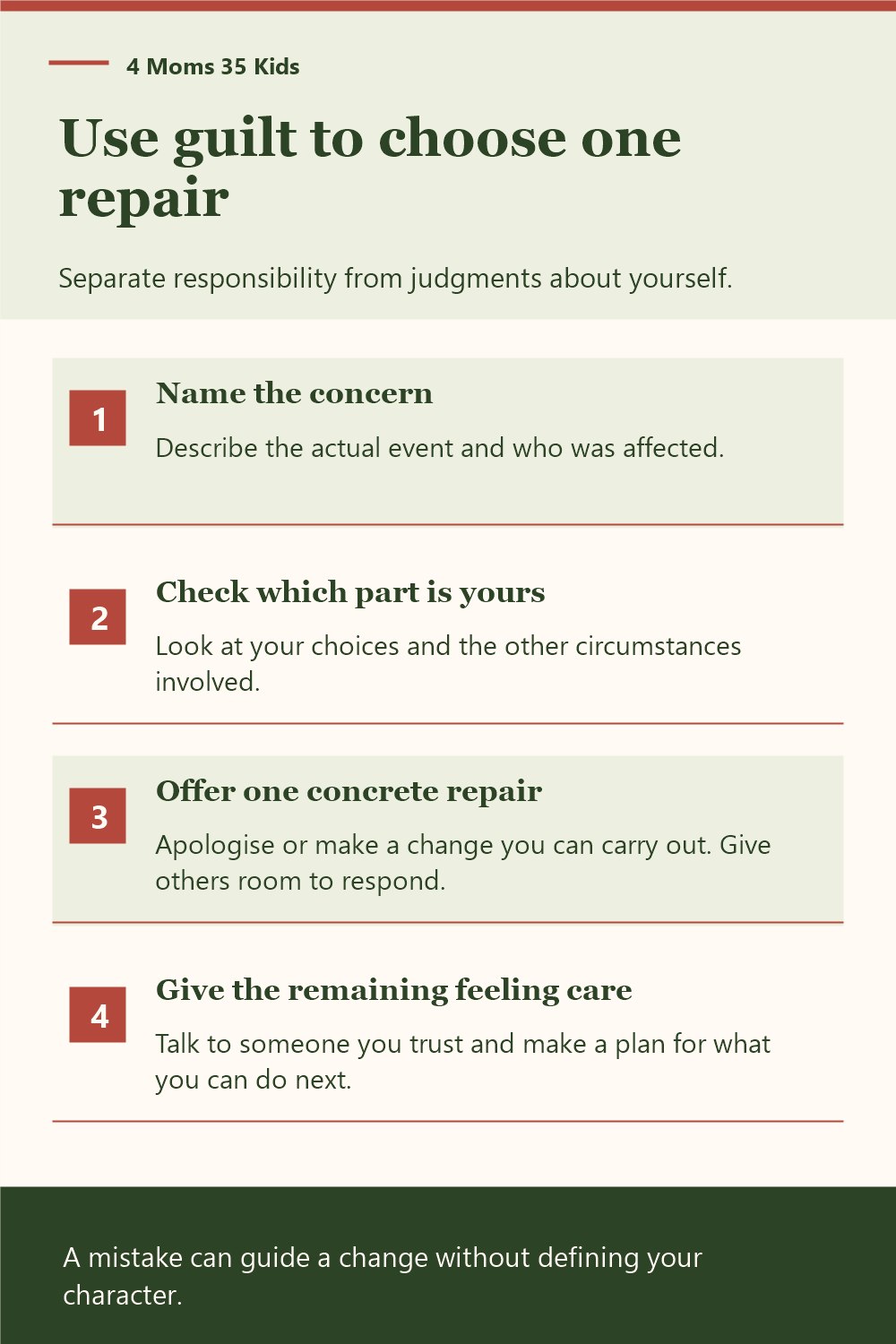
Read the infographic in text
Use guilt to choose one repair Separate responsibility from judgments about yourself.
- Name the concern Describe the actual event and who was affected.
- Check which part is yours Look at your choices and the other circumstances involved.
- Offer one concrete repair Apologise or make a change you can carry out. Give others room to respond.
- Give the remaining feeling care Talk to someone you trust and make a plan for what you can do next.
A mistake can guide a change without defining your character.