

When emotions feel overwhelming, you may want them to disappear before you do anything else. A more manageable starting point is to notice what you feel, consider what is happening and choose the next response available to you.
You do not need complete control over every feeling. These ideas offer options for an ordinary difficult moment, with room to seek support when the situation needs more.
In this guide
- Name what you are feeling
- Separate the feeling from the explanation
- Pause before a difficult response
- Choose one action you can take
- Use movement as an option
- Give painful feelings some room
- Use words that are fair and specific
- Ask for practical or emotional support
- Write briefly and know when to seek help
1. Name what you are feeling
Try a simple description: “I feel disappointed,” “I am worried,” or “I am angry and tired.” You may have several feelings at once, or you may not yet have a clear name for them.
You do not have to settle on the perfect word before taking care of what is happening. Notice what you need to address now, such as stepping away from an argument or asking for help with a task.
2. Separate the feeling from the explanation
“I feel rejected” describes an experience. “They deliberately ignored me” is an explanation that may need checking. Ask what you know, what you are assuming and whether there is information you do not have.
The NHS guidance on reframing unhelpful thoughts suggests examining the evidence and considering other perspectives. You can look for a fairer account without insisting on a cheerful one or dismissing a real problem.

3. Pause before a difficult response
If you are about to send a harsh message or continue an argument, consider whether a pause is available. You might save the message privately, leave the conversation when safe or say when you can return to it.
For example: “I want to discuss this, but I need a break first. Can we speak after dinner?” A pause is most useful when it makes room for a clearer next step. It does not require the other person to agree with you.
4. Choose one action you can take
Separate a feeling from what you choose to do with it. Being angry does not require shouting; being disappointed does not require agreeing to something you cannot manage.
Name one decision that is yours to make. You might ask a question, decline a request or arrange a conversation. If someone has been harmed, consider what repair is needed as well. Feelings can matter while responsibility for behaviour still matters.
5. Use movement as an option
If it suits your health, energy and surroundings, try a walk, a stretch or a change of position. You could also sit somewhere quieter or take a break from a demanding task.
Choose what is comfortable rather than turning movement into an obligation to discharge emotion. If you still feel upset afterward, that does not mean you did it incorrectly. The practical issue may need attention or another kind of support.
6. Give painful feelings some room
You may need time to acknowledge sadness, regret or loss without immediately finding a lesson in it. Ask what feels manageable now, rather than requiring yourself to revisit every painful memory at once.
You can stop a reflective exercise if it feels too much. You do not have to confront someone, share private experiences publicly or forgive on demand in order to ask for support. Choose a person or professional with whom you feel safe discussing what you need.
7. Use words that are fair and specific
Replace a sweeping judgement with a particular description where you can. “I forgot the appointment” gives you something to address. “I ruin everything” makes a much larger claim about you.
A fair phrase might be, “I regret this, and I can contact them about the next step.” It does not have to feel inspiring. Words can help describe your situation; a special phrase cannot promise to erase a feeling, rewire your brain or fix another person’s behaviour.
8. Ask for practical or emotional support
Make a request that tells someone what would be useful: “Could you listen for ten minutes?” or “Can you cover pickup so I can attend an appointment?” They may need to say what they can offer.
When children are nearby, keep adult responsibility with adults. A child can know you are upset without being expected to solve the problem or take sides. If a conversation would be unsafe, consider individual support instead of assuming you must resolve it face to face.
9. Write briefly and know when to seek help
If writing helps, try three short prompts: What happened? What am I feeling or assuming? What is one useful next step? There is no requirement to write for a set time or to keep going until you feel better.
The National Institute of Mental Health’s mental-health guidance recommends professional help for severe or distressing symptoms lasting two weeks or more, including difficulty sleeping, concentrating or completing usual tasks. You can seek advice sooner if you are concerned.
If you are in immediate danger or might act on thoughts of harming yourself, contact local emergency or crisis support now. In the United States, call or text 988 for the Suicide & Crisis Lifeline.
Pause a message you feel tempted to answer quickly
A group message criticising how you handled an event might make you want to defend yourself in front of everyone. If there’s also a question about pickup, reply only to that part. Read the rest later and decide whether a private conversation would help. The CDC’s guide to managing difficult emotions offers ways to take a break and respond more deliberately.
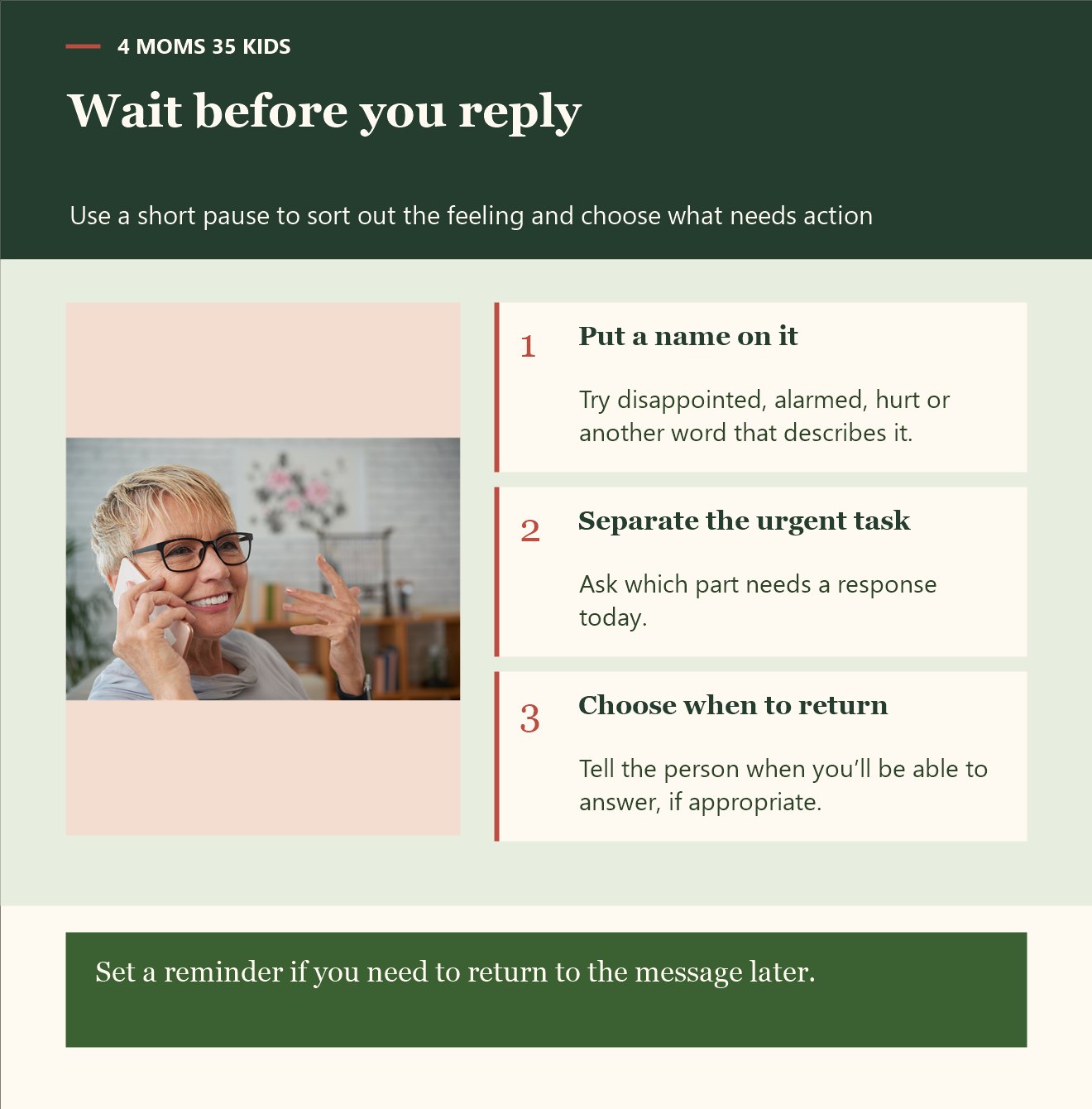
Read the infographic in text
Wait before you reply
Use a short pause to sort out the feeling and choose what needs action
- Put a name on it Try disappointed, alarmed, hurt or another word that describes it.
- Separate the urgent task Ask which part needs a response today.
- Choose when to return Tell the person when you’ll be able to answer, if appropriate.
Set a reminder if you need to return to the message later.